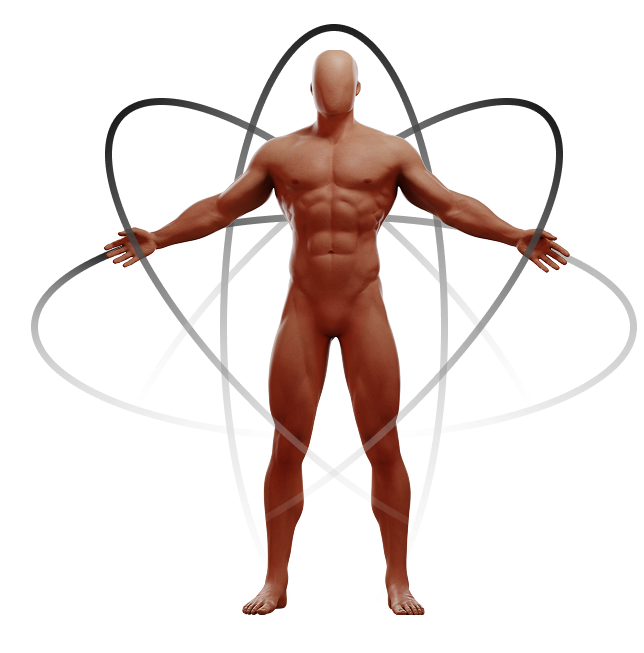
Anthropometrics are direct measurements of the human body.
They describe size, proportion, and shape using physical dimensions such as lengths, circumferences, and skinfold thickness — without relying on electrical signals or device-specific assumptions.
In Formetrix, anthropometrics form the foundation of body composition analysis.
What Anthropometrics Are
Anthropometric measurements include:
-
Lengths (e.g. height, limb length)
-
Circumferences (e.g. waist, hip, limbs)
-
Skinfolds (subcutaneous fat thickness at specific sites)
They capture real, physical change in the body — not estimates inferred from impedance or proprietary models.
Because they measure size directly, anthropometrics are:
-
repeatable
-
device-independent
-
comparable over time
How Formetrix Uses Anthropometrics
Formetrix treats anthropometrics as primary inputs. From them, the app:
-
calculates composition metrics (e.g. body fat %, lean mass)
-
derives interpretation indexes (e.g. ratios, symmetry)
-
builds trends and cumulative views
-
anchors AI-based interpretation in real measurements
No single measurement is assumed to be perfect. Meaning comes from how measurements evolve together over time.
Measurement Points in the Interface
Each anthropometric measurement is represented visually on the body model.
Ripple Indicators
-
Show the location of a measurement point
-
Appear when points are collapsed
-
Reduce visual clutter in View Mode
Measurement Lines & Circles
When expanded:
-
Lines indicate linear measurements (e.g. limb length)
-
Circles indicate circumferences (e.g. waist, thigh)
-
The displayed value updates based on the active measurement selection — either a specific measurement date or the cumulative view
-
Tapping the measurement again opens the historical chart for that specific measurement point, showing how it has changed over time
Skinfold Measurements
Skinfolds measure subcutaneous fat thickness using calipers.
In Formetrix, skinfolds:
-
are optional and advanced
-
improve body fat estimation accuracy
-
unlock higher-resolution composition metrics
However, they are technique-sensitive.
Important
Skinfolds improve accuracy only when measured correctly and consistently. Poor technique can reduce accuracy more than simpler methods.
Formetrix supports multiple validated skinfold methods (e.g. JP3, DW4, JP7) and clearly indicates when requirements are met.
Grouping Anthropometric Measurements
Anthropometric measurements can be organized into groups based on purpose.
Defaults:
-
General
- Height, weight, waist circumference, hip circumference, chest circumference
-
Body Building
-
Height, weight
-
Neck, chest, waist, hip
-
Left/right biceps, thighs, calves
-
-
Symmetry
-
Left/right arm length
-
Left/right biceps and forearms
-
Left/right leg length, thighs, calves
-
-
Skinfolds (SF)
-
Chest, biceps, abdominal
-
Triceps, thigh
-
Subscapular, suprailiac, midaxillary, calf
-
-
All Except Skinfolds
- All anthropometric points except skinfold sites
In Formetrix, groups:
-
simplify input
-
reduce unnecessary repetition
-
allow goal-specific tracking
-
keep the body model coherent
You can enable, disable, or customize these groups at any time via pointer presets.
Measurement Points — Context & Notes (T-Pose)
| Category | Measurement Point | What It Represents | Usage Notes / When It Matters |
|---|---|---|---|
| Basics | Height | Structural body length | Stable reference value. Required for most indexes. Does not need frequent re-measurement. |
| Weight | Total body mass | Changes frequently. Core input for composition and interpretation. | |
| Shoulder Width | Skeletal width | Structural proportion reference. Useful for balance and visual analysis, not short-term change. | |
| Head & Neck | Head Circumference | Cranial size | Rarely changes. Mostly informational. |
| Neck Circumference | Upper torso girth | Required for tape-based body fat estimation (e.g. US Navy). Technique consistency is critical. | |
| Torso | Chest Circumference | Upper torso volume | Useful for physique and posture tracking. Not required for core composition estimates. |
| Waist Circumference | Primary abdominal reference | Most important waist point. Used by multiple health and composition indexes (WHtR, ABSI, VFA). Track consistently. | |
| One Inch Above Belly Button | Upper abdominal distribution | Optional. Useful to distinguish upper abdominal fat or bloating effects. | |
| One Inch Below Belly Button | Lower abdominal distribution | Optional. Often changes differently than upper waist during fat loss. | |
| Hip Circumference | Pelvic width | Required for waist-to-hip ratio and female tape-based body fat estimation. | |
| Arms – Left / Right | Arm Length | Limb length | Structural measurement. Useful for symmetry and proportion, not frequent change tracking. |
| Bicep Circumference | Upper arm size | Common in physique tracking. Track left/right for symmetry if relevant. | |
| Forearm Circumference | Lower arm size | Useful for strength or sport-specific tracking. | |
| Wrist Circumference | Joint size | Mostly structural. Rarely changes. | |
| Legs – Left / Right | Leg Length | Limb length | Structural reference. Useful for symmetry and biomechanical context. |
| Thigh Circumference | Upper leg size | Used for symmetry and visceral fat estimation. Landmark consistency matters. | |
| Knee Circumference | Joint size | Structural. Rarely changes. | |
| Calf Circumference | Lower leg size | Useful for symmetry and performance tracking. | |
| Ankle Circumference | Joint size | Structural reference. | |
| Skinfolds (SF) | Chest, Triceps, Subscapular, Suprailiac, Abdominal, Thigh, Midaxillary, etc. | Subcutaneous fat thickness | Advanced use only. Improves body-fat accuracy only if technique is consistent. Poor technique reduces accuracy. |